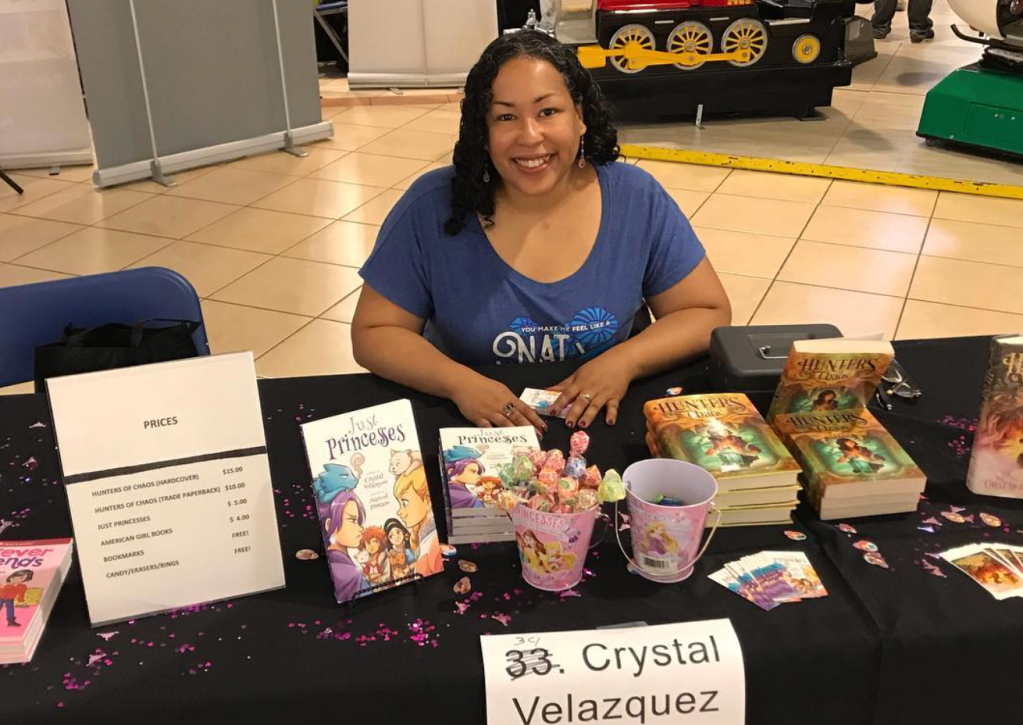
Crystal Velasquez is the author of Wildcats graphic Novel, she holds a bachelor’s degree in creative writing from Pennsylvania State University and is a graduate of the New York University Summer Publishing Institute. Currently an editor at Working Partners Ltd. and a freelance proofreader.
.
Working with Crystal has been wonderful! As I progressed through the script for the first volume of Wildcats, I gradually fell in love with the characters, they are fantastic! And the story is very exciting. Drawing her book has been an incredible adventure.
.
I had the opportunity to chat with Crystal and learn more about her work and personal life. I’m sharing that with all of you right here.
.
Crystal Velasquez es la autora de la novela gráfica Wildcats. Es licenciada en escritura creativa por la Universidad Estatal de Pensilvania y graduada del Instituto de Publicaciones de Verano de la Universidad de Nueva York. Actualmente es editora en Working Partners Ltd. y correctora freelance.
.
¡Trabajar con Crystal ha sido maravilloso! A medida que avanzaba en el guion del primer volumen de Wildcats, me fui enamorando de los personajes; ¡son fantásticos! Y la historia es muy emocionante. Dibujar su libro ha sido una aventura increíble.
.
Tuve la oportunidad de charlar con Crystal y conocer más sobre su trabajo y su vida personal. Comparto esto con ustedes aquí mismo.
.
INTERVIEW | ENTREVISTA
.
E:
Hello Crystal : D
I’m so happy to share this project with you. WildCats has become one of my favorite stories that I’ve illustrated, and I can’t wait to learn more about the journey of these adorable and brave girls. I’ve shared the WildCats graphic novel at several events in Mexico, and both young people and adults have loved it. That’s why I’d like them to get to know a little more about you : )
.
I’d love for you to give me a short introduction of yourself—your name, what you do, where you’re from, your interests—a brief snapshot of who Crystal Velasquez is, both as an author and as a person.
——-
Hola Crystal : D Estoy muy feliz de compartir este proyecto contigo. WildCats se ha convertido en una de mis historias favoritas que he ilustrado, y no puedo esperar a saber más sobre el viaje de estas adorables y valientes chicas. He compartido la novela gráfica de WildCats en varios eventos en México, y tanto jóvenes como adultos la han amado. Es por eso que me gustaría que conocieran un poco más sobre ti : )
.
Me encantaría que me dieras una breve presentación tuya: tu nombre, a qué te dedicas, de dónde eres, tus intereses… un breve vistazo de quién es Crystal Velasquez, tanto como autora como persona.
C:
Hello, Eva!
I’m so happy to share this project with you too! I could not have asked for a better partner. Your illustrations are amazing, and I still can’t believe how perfectly you brought to life what I had only pictured in my head.
.
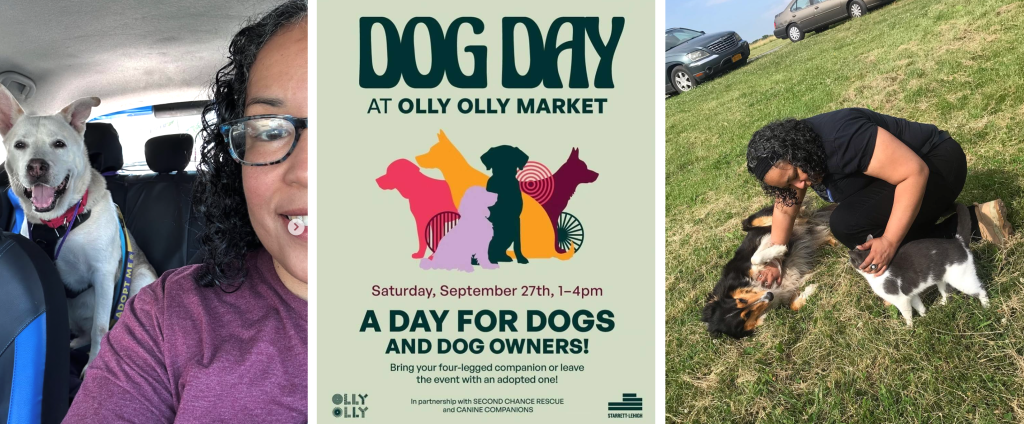
Okay, short introduction of me… Ha ha… My full name is Crystal Dawn Velasquez. I’m of Puerto Rican descent, but I was born in the Bronx in New York City. I am currently a kid’s book editor and writer, so I am living my dream. In my spare time I love seeing movies and Broadway musicals, traveling (this year I’m going to Jamaica, England, and Ireland), and volunteering at my local animal rescue.
I spend a lot of time with my friends and family, and although I have no kids of my own, I love children and always look forward to doing school visits. This year one of the schools I visited in New Jersey has planned to make Wildcats part of their reading program, and I’ll be helping the kids to write stories of their own. I can’t wait.
.
¡Hola, Eva!
¡Estoy muy contenta de compartir este proyecto contigo también! No podría haber pedido una mejor compañera. Tus ilustraciones son increíbles, y todavía no puedo creer la perfección con la que lograste dar vida a lo que solo imaginaba.
.
Bueno, una breve presentación… Ja, ja… Mi nombre completo es Crystal Dawn Velasquez. Soy de ascendencia puertorriqueña, pero nací en el Bronx, Nueva York. Actualmente soy editora y escritora de libros infantiles, así que estoy viviendo mi sueño. En mi tiempo libre me encanta ver películas y musicales de Broadway, viajar (este año voy a Jamaica, Inglaterra e Irlanda) y ser voluntaria en el refugio de animales de mi localidad.
Paso mucho tiempo con mis amigos y familiares, y aunque no tengo hijos, me encantan los niños y siempre espero con ilusión las visitas escolares. Este año, una de las escuelas que visité en Nueva Jersey ha planeado incluir Wildcats en su programa de lectura, y ayudaré a los niños a escribir sus propias historias. No puedo esperar.
.
.
E:
What was Crystal like as a child? Have you always enjoyed writing stories? And did you also love cats?
¿Cómo era Crystal de niña? ¿Siempre te ha gustado escribir cuentos? ¿Y también te encantaban los gatos?
C:
I always loved to read! As a kid, you would often find me with my nose in a book, so of course eventually I wanted to try my hand at writing my own. I started writing poems and short stories when I was in 3rd grade, and I used to give them to my family members as gifts. Even though I went to a high school that specialized in math and science, I gravitated to all the writing and literature classes. Eventually, I went to college and majored in creative writing. I feel so lucky to have made my dream come true of becoming a writer.
.
I’ve also always loved cats and dogs. I’ve never had a cat of my own, but I am the go-to cat- and dog-sitter for all my friends. I had rabbits for a while when I was little, and a Great Dane named Tina. When I was 13, I got my first puppy, Bandit, who I loved like crazy. Now I volunteer at an animal rescue. I spend a lot of time playing with the cats and kittens or driving dogs to their foster homes, vet appointments, or adoption events. Nothing makes me happier than seeing one of the rescued cats or dogs find their forever home.
.
¡Siempre me encantó leer! De niña, solían encontrarme con la nariz metida en un libro, así que, por supuesto, con el tiempo quise intentar escribir los míos. Empecé a escribir poemas y cuentos en tercer grado, y solía regalárselos a mi familia. Aunque fui a un instituto especializado en matemáticas y ciencias, me fascinaban todas las clases de escritura y literatura. Con el tiempo, fui a la universidad y me especialicé en escritura creativa. Me siento muy afortunada de haber cumplido mi sueño de ser escritora.
.
Siempre me han encantado los gatos y los perros. Nunca he tenido un gato propio, pero soy la cuidadora de gatos y perros de todos mis amigos. Tuve conejos durante un tiempo cuando era pequeña y una gran danesa llamada Tina. A los 13 años, tuve mi primer cachorro, Bandit, al que quise con locura. Ahora soy voluntaria en un refugio de animales. Paso mucho tiempo jugando con los gatos o llevando a los perros a sus hogares de acogida, citas veterinarias o eventos de adopción. Nada me hace más feliz que ver a un gato o perro rescatado encontrar su hogar definitivo.
.
E:
Where did the idea for WildCats come from?
¿De dónde surgió la idea de Wildcats?
C:
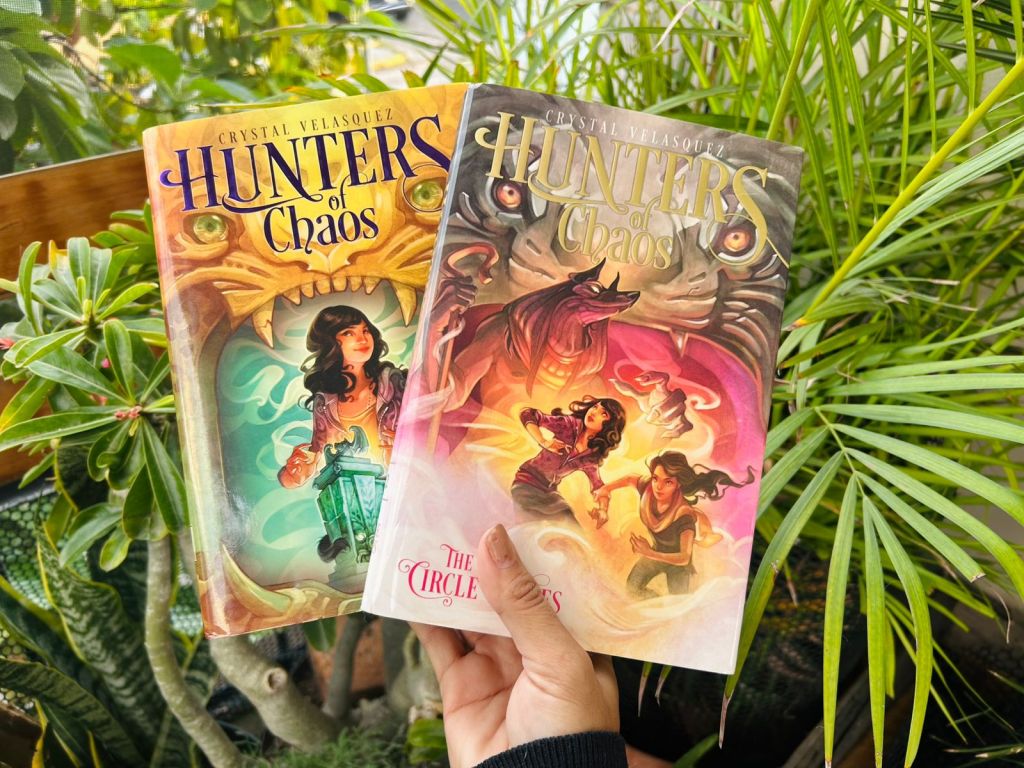
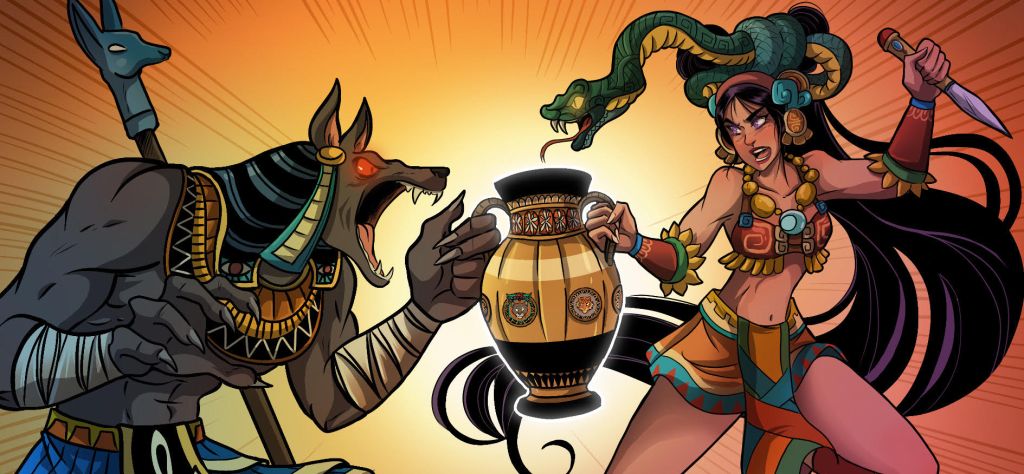
Wildcats is a reimagining of my Hunters of Chaos novels, which were published in 2016. The original idea was a joint effort with the editors I work with. We wanted to create a story in which young girls would get to be powerful heroes while also being vulnerable kids who worry about the same things other kids do—friendships, relationships, family, school, bullies. We also wanted them to draw power from their different backgrounds and cultures, and to go up against mythical figures from different cultures as well. So much of ancient mythologies revolve around animals and their connection to human beings. Anubis, who appears to be part animal himself, seemed like the perfect antagonist for the girls to face.
Wildcats es una reinvención de mis novelas Cazadoras del Caos, publicadas en 2016. La idea original fue un esfuerzo conjunto con los editores con los que trabajo. Queríamos crear una historia en la que las niñas se convirtieran en heroínas poderosas y, al mismo tiempo, en niñas vulnerables que se preocupan por las mismas cosas que otros niños: amistades, relaciones, familia, escuela, acoso escolar. También queríamos que se fortalecieran gracias a sus diferentes orígenes y culturas, y que se enfrentaran a figuras míticas de otras culturas. Gran parte de las mitologías antiguas giran en torno a los animales y su conexión con los seres humanos. Anubis, quien parece ser en parte animal, parecía el antagonista perfecto al que las niñas se enfrentarían.
.
.
E:
Many authors reflect parts of themselves in their characters or in the situations they create. Is there something of you in WildCats? What inspired you to shape the story?
Muchos autores reflejan partes de sí mismos en sus personajes o en las situaciones que crean. ¿Hay algo de ti en Wildcats? ¿Qué te inspiró a dar forma a la historia?
C:
I really identify with Mina in Wildcats. When I was younger, my family moved a lot, so I have been the nervous new girl in school who didn’t know anyone more than once. When I was Mina’s age, I was lucky enough to find good friends who are still by my side to this day. Like Mina and her friends, mine come from all different backgrounds (Dereeka’s family is from Bermuda, Jose’s are from El Salvador, Suraj’s are from India, and mine are from Puerto Rico). But our various origins are part of what makes our friendship so special. Also, Mina is named after my grandmother, Guillermina, who was one of my favorite people on the planet. She passed away almost ten years ago, and I miss her every day, so I am always looking for ways to write her into my work. The scenes of Mina and her aunt on the island were based on a trip I took there to see the Taino cultural center in Utuado.
.
I’m also a lot like Shani. She finds the humor in any situation and can be kind of sarcastic. She’s more of a rule breaker than I am, and she’s way better at computers, but like her, I try not to take myself too seriously. When Shani points out how crazy a situation is in the book, it’s because I think it’s crazy too! But not everything is a joke. Her friends and family matter more than anything to her, and I feel the same way.
.
There’s also a little bit of wish fulfillment in there. The world can be a scary place sometimes. Who wouldn’t want the power to transform into a powerful creature who can protect herself, her loved ones, and the whole world? As far as the cats go, I’m most jealous of Lin being able to become a tiger. They’re just so beautiful and playful and strong.
.
Me identifico mucho con Mina en Wildcats. De pequeña, mi familia se mudaba mucho, así que siempre fui la chica nueva y nerviosa del colegio que no conocía a nadie más que una vez. Cuando tenía la edad de Mina, tuve la suerte de encontrar buenos amigos que siguen a mi lado. Al igual que Mina y sus amigos, los míos vienen de orígenes muy diferentes (la familia de Dereka es de Bermudas, la de José de El Salvador, la de Suraj de India y la mía de Puerto Rico). Pero nuestros diversos orígenes son parte de lo que hace nuestra amistad tan especial. Además, Mina lleva el nombre de mi abuela, Guillermina, quien era una de mis personas favoritas del mundo. Falleció hace casi diez años y la extraño cada día, así que siempre busco maneras de incluirla en mi obra. Las escenas de Mina y su tía en la isla se basaron en un viaje que hice allí para ver el centro cultural taíno en Utuado.
.
También me parezco mucho a Shani. Encuentra el humor en cualquier situación y puede ser algo sarcástica. Es más de romper las reglas que yo y se le dan mucho mejor las computadoras, pero al igual que ella, intento no tomarme demasiado en serio. Cuando Shani señala lo loca que es una situación en el libro, ¡es porque yo también lo creo! Pero no todo es broma. Sus amigos y su familia le importan más que cualquier otra cosa, y yo pienso lo mismo.
.
También hay un poco de cumplimiento de deseos ahí. El mundo puede ser un lugar aterrador a veces. ¿Quién no querría el poder de transformarse en una criatura poderosa que pueda protegerse a sí misma, a sus seres queridos y al mundo entero? En cuanto a los gatos, lo que más envidio de Lin es que pueda convertirse en tigre. Son tan hermosos, juguetones y fuertes.
.
E:
Who would you say this book is intended for?
¿A quién dirías que va dirigido este libro?
C:
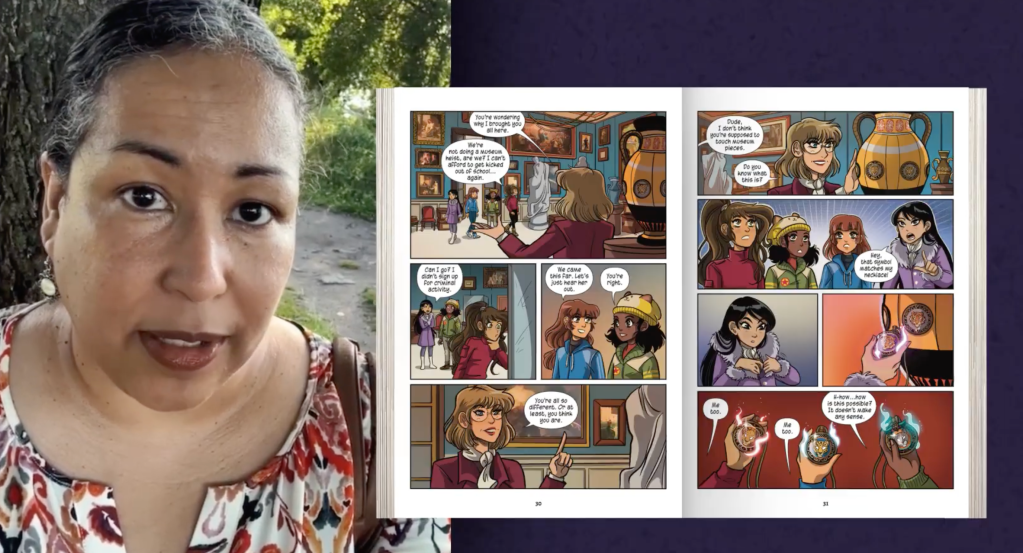
Everyone! I think the idea that only girls would be interested in stories that have girls as main characters is outdated. The story is exciting, the dialogue is funny, and some of the bad guys are scary. Who wouldn’t be into that? And even though I wrote it with eight to twelve-year-old kids in mind, I think older kids and adults would enjoy it too—especially thanks to the incredible artwork. You made this a book worth picking up even if the person doesn’t read a word!
.
Ten years ago, a 12-year-old fan emailed me to tell me how much she had enjoyed reading Hunters of Chaos. Recently, she wrote to me again. She’s 22 now, but she wanted me to know that she’d read Wildcats and loved it and the illustrations. How cool is that?
.
¡A todos! Creo que la idea de que solo a las chicas les interesan las historias protagonizadas por chicas está anticuada. La historia es emocionante, los diálogos son divertidos y algunos de los villanos dan miedo. ¿A quién no le gustaría? Y aunque lo escribí pensando en niños de ocho a doce años, creo que niños mayores y adultos también lo disfrutarían, especialmente gracias a las increíbles ilustraciones. ¡Has hecho que valga la pena leerlo incluso si no se lee ni una palabra!
.
Hace diez años, una fan de 12 años me escribió para contarme cuánto había disfrutado leyendo Cazadores del Caos. Hace poco, me volvió a escribir. Ahora tiene 22 años, pero quería que supiera que había leído Wildcats y que le habían encantado, tanto la novela como las ilustraciones. ¡Qué genial!
.
.
E:
Besides WildCats, what other books have you written?
Además de WildCats, ¿qué otros libros has escrito?
C:
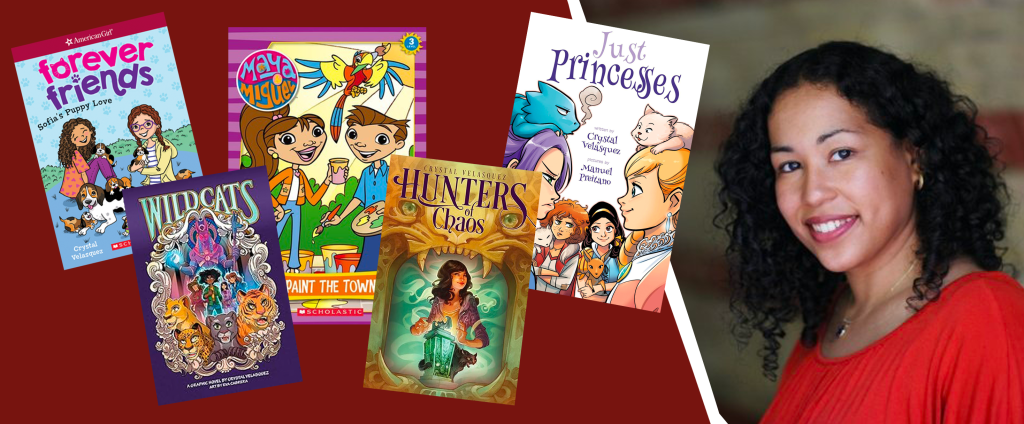
I’ve been lucky enough to have the opportunity to write more than twenty books over the years. My first books were the Maya & Miguel series, based on the TV show about a set of half Mexican, half Puerto Rican twins and their friends and family. Maya & Miguel: My Twin Brother/My Twin Sister was the first book I ever had published.
After that, I wrote three choose-your-adventure novels called Your Life, But Better; Your Life, But Cooler; and Your Life, But Sweeter. At the end of each chapter, the reader takes a personality quiz, and the results determine where the story goes next.
.
I have written a series for American Girl called Forever Friends about a group of girls who volunteer at an animal rescue. I wrote another series called Life in the Doghouse, based on a real dog rescue in South Carolina. Each book is based on an actual dog who once lived in the rescue, and the stories are about them finding their forever homes.
I wrote a graphic novel called Just Princesses, about a young princess who must save her kingdom after her evil stepmother casts a spell that backfires and makes all the adults disappear.
.
There were the Hunters of Chaos novels, which were the inspiration for Wildcats.
.
I’ve also written six mini comic books that were published as one volume (under a different name) called Day of the Dead, about a young woman who has the power to raise the dead and must fight off people seeking to use her powers for evil purposes.
.
I’ve also written a short story called “Guillermina,” which was featured in Edgardo Miranda-Rodriguez’s graphic novel anthology, Ricanstruction: Reminiscing and Rebuilding Puerto Rico. The proceeds from that book continue to help grassroots organizations on the island. Panels from my story are going to be featured in an upcoming exhibit at the New York Public Library about Puerto Ricans in the world of comics. It opens on October 8, and I am so excited and proud!
.
I just finished writing the second Wildcats book, I’m working on a new graphic novel that will be a romcom for young adults, and I’m writing a middle grade fantasy series.
.
He tenido la suerte de escribir más de veinte libros a lo largo de los años. Mis primeros libros fueron la serie Maya y Miguel, basada en la serie de televisión sobre una pareja de gemelos mitad mexicanos y mitad puertorriqueños, sus amigos y familiares. Maya y Miguel: Mi hermano gemelo/Mi hermana gemela fue el primer libro que publiqué.
.
Después, escribí tres novelas de aventuras tituladas “Tu vida, pero mejor”; “Tu vida, pero más genial”; y “Tu vida, pero más dulce”. Al final de cada capítulo, el lector realiza un test de personalidad, y los resultados determinan el rumbo de la historia.
.
Escribí una serie para American Girl llamada “Amigos para siempre” sobre un grupo de chicas que se ofrecen como voluntarias en un refugio de animales. Escribí otra serie llamada “Vida en la caseta del perro”, basada en un refugio de perros real en Carolina del Sur. Cada libro se basa en un perro real que vivió en el refugio, y las historias tratan sobre cómo encuentran un hogar definitivo.
.
Escribí una novela gráfica llamada “Solo princesas”, sobre una joven princesa que debe salvar su reino después de que su malvada madrastra lanza un hechizo que fracasa y hace desaparecer a todos los adultos.
.
Estaban las novelas de Cazadores del Caos, que inspiraron Wildcats.
.
También escribí seis minicómics que se publicaron en un solo volumen (con un nombre diferente) llamado Día de los Muertos, sobre una joven que tiene el poder de resucitar a los muertos y debe luchar contra quienes intentan usar sus poderes con fines malignos.
.
También escribí un cuento corto llamado “Guillermina”, que apareció en la antología de novelas gráficas de Edgardo Miranda-Rodríguez, Ricanstruction: Reminiscing and Rebuilding Puerto Rico. Las ganancias de ese libro continúan ayudando a organizaciones de base en la isla. Paneles de mi historia se presentarán en una próxima exhibición en la Biblioteca Pública de Nueva York sobre los puertorriqueños en el mundo del cómic. Se inaugura el 8 de octubre, ¡y estoy muy emocionada y orgullosa!
.
Acabo de terminar de escribir el segundo libro de Wildcats, estoy trabajando en una nueva novela gráfica que será una comedia romántica para jóvenes adultos y estoy escribiendo una serie de fantasía para jóvenes.
.
.
E:
What do you hope to offer readers through this story?
¿Qué esperas ofrecer a los lectores con esta historia?
C:
I hope their main takeaway is that they are more powerful than they know, and they’re even stronger together. We are facing some scary times, but we are not helpless or hopeless. We can all do our part to save the world—even without supernatural powers.
.
I hope that the book inspires readers to find out more about their own cultures and ancestors and that doing so fills them with a sense of pride and purpose.
.
Finally, I hope that it gets more kids into reading! I know some of them think books are boring, or they just have a hard time visualizing what’s happening. Graphic novels and comic books are a great way to draw readers in and keep them interested. If they like those, maybe eventually, they’ll be open to giving other types of books a chance. If Wildcats could be part of that happening, that would be amazing.
.
Espero que la principal lección sea que son más poderosos de lo que creen, y que juntos son aún más fuertes. Nos enfrentamos a tiempos aterradores, pero no estamos indefensos ni desesperados. Todos podemos aportar nuestra parte para salvar el mundo, incluso sin poderes sobrenaturales.
.
Espero que el libro inspire a los lectores a descubrir más sobre sus propias culturas y ancestros, y que al hacerlo les llene de orgullo y propósito.
.
Por último, ¡espero que anime a más niños a leer! Sé que algunos piensan que los libros son aburridos o simplemente les cuesta visualizar lo que está sucediendo. Las novelas gráficas y los cómics son una excelente manera de atraer a los lectores y mantener su interés. Si les gustan, quizás con el tiempo estén abiertos a darle una oportunidad a otros tipos de libros. Si Wildcats pudiera formar parte de ese proceso, sería fantástico.
.
E:
This is a two-part question:
.
The protagonists transform into different big cats and carry cultural connections—Egyptian, Chinese, and, in Mina’s case, Puerto Rican. With the gods, we also see influences from pre-Hispanic cultures.
A: What did it mean to you to choose those specific animals and cultural references?
.
Esta es una pregunta de dos partes:
.
Los protagonistas se transforman en diferentes grandes felinos y tienen conexiones culturales: egipcias, chinas y, en el caso de Mina, puertorriqueñas. En los dioses, también vemos influencias de culturas prehispánicas.
A. ¿Qué significó para ti elegir esos animales y referencias culturales específicos?
C:
A: In school, I probably learned more about Egyptian art and culture than I did my own. On field trips to the Metropolitan Museum of Art here in New York City, visiting the Egyptian wing was a must. And between the sphinxes, Anubis, and cat goddesses like Bastet, it was clear that animals were revered in ancient Egypt. So not one but two characters (Anubis and Shani) represent that culture. Shani can become a lion because they play such a huge part in ancient Egyptian mythology, religion, and artwork. Lions were once native to Egypt, and some royalty even kept them as pets. Now, sadly, there are no more wild lions in Egypt, but Shani will carry on their legacy.
.
I grew up in Flushing, Queens, in NYC, which has a large Asian community. The Chinese population here is said to have surpassed that of Chinatown. I’ve been lucky to be included in cultural events like traditional Chinese weddings and the Lunar New Year parade, where you can see how important animals (both real and fictional) are to the culture. They often have representations of the twelve zodiac animals, and one of those is, of course, the tiger. Tigers still live in China, and there are conservation efforts underway to make sure that remains true. I thought that would be the perfect cat to represent Lin, particularly since they have so much in common. They’re both beautiful and fierce, and they’re usually loners. But under the right circumstances, they can form really strong bonds.
.
Ana is Mexican, and her Mayan ancestors depicted jaguars in their myths as gods and symbols of strength and power. In real life, jaguars continue to thrive in Mexico, so I thought they’d be the right fit for Ana. I based her abilities as a human (being a track star) on the fact that jaguars are fast runners. They can run up to 50 miles per hour! Not as fast as cheetahs, but still very impressive. I’ve traveled to Mexico several times, and on one trip, I got to see the Coba ruins and climb the stairs. I thought a site of such cultural significance would make sense as the place that Ana first acquired her powers (though I chose the more popular Chichén Itzá).
.
Finally, Mina is of Puerto Rican descent, which of course is true of me as well. Getting to see the petroglyphs up close on my last visit cemented how important animals were to the Tainos. It was tricky, though, because large cats aren’t native to the island, and according to my research, the Taino people would not have had any interaction with pumas. But so much of the story revolves around our ancestors and our connections with each other, even across the divide of life and death. Part of the history of Puerto Rico includes people having to leave the island to come to various states, where pumas are common. In this way, I imagined the ancient Tainos accessing knowledge and experience beyond their lifetimes and adding the puma to their list of honored animals. I don’t want to give too much away, but in the next book, Mina may discover a strong connection to other animals that the Tainos did have access to while still embracing her inner big cat.
.
En la escuela, probablemente aprendí más sobre el arte y la cultura egipcios que sobre los míos propios. En las excursiones al Museo Metropolitano de Arte de Nueva York, visitar el ala egipcia era imprescindible. Y entre las esfinges, Anubis y diosas felinas como Bastet, era evidente que los animales eran venerados en el antiguo Egipto. Así que no uno, sino dos personajes (Anubis y Shani) representan esa cultura.
.
Shani puede convertirse en león porque desempeñan un papel fundamental en la mitología, la religión y el arte del antiguo Egipto. Los leones fueron originarios de Egipto, y algunos miembros de la realeza incluso los tenían como mascotas. Ahora, lamentablemente, ya no hay leones salvajes en Egipto, pero Shani continuará con su legado.
.
Crecí en Flushing, Queens, Nueva York, donde hay una gran comunidad asiática. Se dice que la población china aquí ha superado a la de Chinatown. He tenido la suerte de participar en eventos culturales como bodas tradicionales chinas y el desfile del Año Nuevo Lunar, donde se puede apreciar la importancia de los animales (tanto reales como ficticios) para la cultura.
.
A menudo tienen representaciones de los doce animales del zodíaco, y uno de ellos es, por supuesto, el tigre. Los tigres aún viven en China, y se están llevando a cabo iniciativas de conservación para garantizar que esto siga siendo así. Pensé que sería el gato perfecto para representar a Lin, sobre todo porque tienen mucho en común. Ambos son hermosos y feroces, y suelen ser solitarios. Pero en las circunstancias adecuadas, pueden formar vínculos muy fuertes.
.
Ana es mexicana, y sus antepasados mayas representaban a los jaguares en sus mitos como dioses y símbolos de fuerza y poder. En la vida real, los jaguares siguen prosperando en México, así que pensé que serían perfectos para Ana. Basé sus habilidades como humana (siendo una estrella del atletismo) en el hecho de que los jaguares son corredores veloces. ¡Pueden correr hasta 80 kilómetros por hora! No tan rápido como los guepardos, pero aun así es impresionante. He viajado a México varias veces, y en una de ellas pude ver las ruinas de Cobá y subir las escaleras. Pensé que un sitio de tal importancia cultural tendría sentido como el lugar donde Ana adquirió sus poderes por primera vez (aunque elegí el más popular Chichén Itzá).
Finalmente, Mina es de ascendencia puertorriqueña, lo cual, por supuesto, también es cierto en mi caso. Ver los petroglifos de cerca en mi última visita consolidó la importancia de los animales para los taínos. Sin embargo, fue complicado, ya que los grandes felinos no son nativos de la isla y, según mi investigación, los taínos no habrían tenido ninguna interacción con los pumas.
.
Pero gran parte de la historia gira en torno a nuestros antepasados y nuestras conexiones mutuas, incluso a través de la división entre la vida y la muerte. Parte de la historia de Puerto Rico incluye a personas que tuvieron que abandonar la isla para venir a varios estados, donde los pumas son comunes. De esta manera, imaginé a los antiguos taínos accediendo a conocimientos y experiencias que trascendieron sus vidas y añadiendo al puma a su lista de animales venerados. No quiero revelar demasiado, pero en el próximo libro, Mina podría descubrir una fuerte conexión con otros animales a los que los taínos sí tuvieron acceso, mientras seguía abrazando a su felino interior.
.
.
E:
and B: What was your process like when researching and deciding which elements to include?
y B ¿Cómo fue tu proceso de investigación y decisión sobre qué elementos incluir?
C:
Some of what I included was from hands-on research. (As I’ve said, I did actually go to the Indigenous Cultural Center in Utuado, Puerto Rico, which provided me with a wealth of information. If you ever go, definitely see the film they offer before going to see the petroglyphs.) I also bought several books about ancient cultures and did some research online. I wish I could have incorporated everything I learned, because so much of it is fascinating! But the novel could only be so long, and the dialogue had to be simple enough to fit into the limited space of a panel. So I chose the details that I thought were most relevant to the story I was trying to tell, and that would be the most interesting for kids. In book 2 I get to introduce some very cool deities and imagine what interacting with them would be like.
.
Parte de lo que incluí fue fruto de una investigación práctica. (Como ya he dicho, fui al Centro Cultural Indígena de Utuado, Puerto Rico, que me proporcionó muchísima información. Si alguna vez vas, no dudes en ver la película que ofrecen antes de ir a ver los petroglifos).
También compré varios libros sobre culturas antiguas e investigué en línea. ¡Ojalá hubiera podido incorporar todo lo que aprendí, porque gran parte es fascinante! Pero la novela tenía un límite de extensión, y el diálogo debía ser lo suficientemente simple como para caber en el espacio limitado de una viñeta. Así que elegí los detalles que consideré más relevantes para la historia que intentaba contar y que serían los más interesantes para los niños. En el segundo libro, presento algunas deidades muy interesantes e imagino cómo sería interactuar con ellas.
.
E:
Do you have a favorite part of WildCats? Any scene you always remember fondly?
¿Cuál es tu parte favorita de WildCats? ¿Alguna escena que siempre recuerdes con cariño?
C:
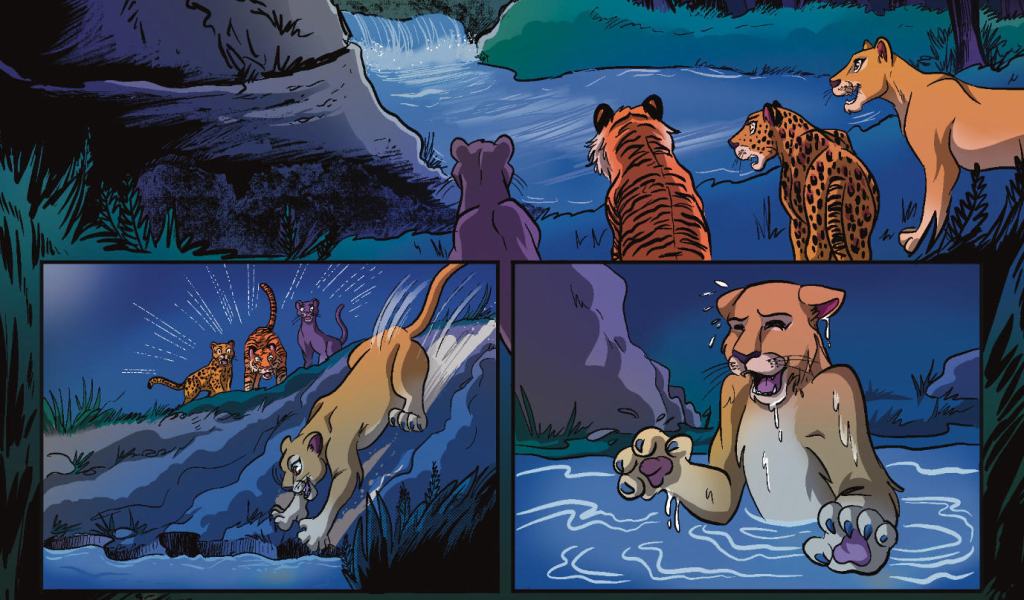
My favorite scene is when the four of them go out running together for the first time as cats and end up catching fish in the pond. The artwork for those scenes is so wonderful. And in a story that is kind of harrowing and dangerous, that is a rare instance where they get to just have fun. Those are the kinds of moments that help build bonds between friends.
As a horror movie fan, I loved the giant snake!
.
Mi escena favorita es cuando los cuatro salen a correr juntos por primera vez como gatos y terminan pescando en el estanque. El arte de esas escenas es maravilloso. Y en una historia tan desgarradora y peligrosa, es un raro momento en el que simplemente pueden divertirse. Ese tipo de momentos ayudan a fortalecer los lazos entre amigos.
Como fan de las películas de terror, ¡me encantó la serpiente gigante!
.
.
E:
Which character do you identify with the most? Do you have a favorite?
¿Con qué personaje te identificas más? ¿Tienes un favorito?
C:
I identify with Mina the most because I’ve infused so much of my own family, background, and experiences in her. (We even have the same wild curly hair.) But how can I pick a favorite? They’re all like my children. I love each of them for different reasons. Mina is kind to a fault and brave even when she’s terrified. Shani is so funny, and she’s the daredevil I want to be. Lin is stylish and chic yet tough and honest, which I really admire about her. She doesn’t let anyone push her around. And Ana is the voice of reason. I think of her as slightly more mature than the rest of the girls, so she really encourages them to think things through. The combination of all four works so well because they bring out the best in each other.
.
Me identifico más con Mina porque he inculcado en ella mucho de mi familia, mis orígenes y mis experiencias. (Incluso tenemos el mismo pelo rizado salvaje). Pero ¿cómo puedo elegir un favorito? Todos son como mis hijos. Los quiero a cada uno por diferentes razones. Mina es amable hasta la exageración y valiente incluso cuando está aterrorizada. Shani es divertidísima y es la temeraria que quiero ser. Lin es elegante y chic, pero a la vez firme y honesta, algo que admiro mucho. No se deja presionar. Y Ana es la voz de la razón. La considero un poco más madura que las demás chicas, así que las anima a reflexionar. La combinación de las cuatro funciona tan bien porque sacan lo mejor de cada una.
.
E:
Is there any fun fact or behind-the-scenes detail from the story or the creative process you’d like to share?
¿Hay algún dato curioso o detalle entre bastidores de la historia o del proceso creativo que te gustaría compartir?
C:
I think readers would get a kick out of the different art styles we considered for the book before landing on the final form. We tried out other illustrators and for a while, we were going to go with a more anime design, and the girls were going to have school uniforms. We experimented with different ages for them, and at one point, they were going to be older teenagers.
.
There were some early sketches of the cats in the girls’ clothes that were kind of funny. Ultimately, I think we landed on the right choices. But it was definitely an interesting process to get there!
.
Creo que a los lectores les encantarán los diferentes estilos artísticos que consideramos para el libro antes de dar con la versión final. Probamos con otros ilustradores y, durante un tiempo, íbamos a optar por un diseño más anime, y las chicas iban a llevar uniformes escolares. Experimentamos con diferentes edades para ellas, y en un momento dado, iban a ser adolescentes mayores.
Había algunos bocetos iniciales de los gatos con la ropa de las chicas que eran bastante graciosos. Al final, creo que acertamos. ¡Pero definitivamente fue un proceso interesante llegar hasta aquí!
.
E:
What’s your creative process like? How do you come up with ideas when writing stories?
¿Cómo es tu proceso creativo? ¿Cómo se te ocurren las ideas al escribir historias?
C:
I This is always a tough question. Sometimes ideas just come to me like divine little gifts. But when I’m stumped, I’ll watch TV or movies, I’ll flip through magazines or newspapers. Sometimes I’ll re-read my own journals (which I’ve been keeping since I was 13.) I’ll brainstorm with friends or family. I’ll listen to music and read lyrics. You never know where inspiration will come from! .
But often I’ll pull from my own life or that of someone I know for ideas. For example, in my book Your Life, But Better, the main character was approached by a model scout while she was in the mall and was asked to be in a fashion show. That has never happened to me, but when I was about 12, my next-door neighbor, who was a designer, did ask me to be in a show she put together to model her clothes.
Sometimes I’ll start with a character, imagine them in my mind with as much detail as I can, and then figure out what kind of situation they would find themselves in.
.
Esta siempre es una pregunta difícil. A veces las ideas me llegan como pequeños regalos divinos. Pero cuando no se me ocurre nada, veo la televisión o películas, hojeo revistas o periódicos. A veces releo mis propios diarios (que llevo desde los 13 años). Hago lluvias de ideas con amigos o familiares. Escucho música y leo letras de canciones. ¡Nunca se sabe de dónde vendrá la inspiración!
.
Pero a menudo busco ideas en mi propia vida o en la de alguien que conozco. Por ejemplo, en mi libro “Tu vida, pero mejor”, un cazatalentos contactó a la protagonista mientras estaba en el centro comercial y le pidió que participara en un desfile de moda. Eso nunca me ha pasado, pero cuando tenía unos 12 años, mi vecina de al lado, que era diseñadora, me pidió que participara en un desfile que ella misma organizó para modelar su ropa.
A veces empiezo con un personaje, lo imagino mentalmente con el mayor detalle posible y luego imagino en qué situación se encontraría.
.
E:
Today, we see a growing presence of Latin voices in series, movies, and comics. What does it mean to you to contribute to that representation through WildCats?
Hoy en día, vemos una creciente presencia de voces latinas en series, películas y cómics. ¿Qué significa para ti contribuir a esa representación a través de WildCats
C:
It means the world to me. When I was growing up, I didn’t see much Latin representation in books. Not that none existed, but most of the characters in the books I had access to were white. I began to think that to be a main character, you had to be white, and that our stories must not be that important or interesting. For that matter, WE were not that important or interesting. Of course that isn’t true, and I’m glad to be part of changing that perception for the next generation.
.
Significa muchísimo para mí. De pequeña, no veía mucha representación latina en los libros. No es que no existiera, pero la mayoría de los personajes de los libros a los que tenía acceso eran blancos. Empecé a pensar que, para ser protagonista, había que ser blanco y que nuestras historias no debían ser tan importantes ni interesantes. De hecho, NOSOTROS no éramos tan importantes ni interesantes. Por supuesto, eso no es cierto, y me alegra contribuir a cambiar esa percepción para la próxima generación.
.
.
E:
The story speaks about heritage and family legacy. What role does your own heritage or cultural identity play in the creation of this book?
La historia habla de la herencia y el legado familiar. ¿Qué papel juega tu propia herencia o identidad cultural en la creación de este libro?
C:
Mina and I share an ethnic identity, and she’s named after my grandmother. My mother tried to teach me about the history of Puerto Rico, its people, and our culture in the same way that Mina’s aunt tries to teach her. My father taught me how to make some of my favorite Puerto Rican dishes, and my grandmother helped me improve my Spanish. (I’m still not fluent, but I can read Spanish pretty well, and can speak enough to be understood.) It’s because of my family that I have such a deep love for my culture and for the island where my parents and grandparents were born.
.
But as a kid, you don’t always realize how precious these cultural ties are, and how easily they can be lost. You just want to fit in. Well, I wanted to emphasize that fitting in doesn’t have to mean hiding the beautiful heritage that helped make you who you are. In the case of Mina, Shani, Lin, and Ana, it is their connection to their individual cultures that serves as a source of strength.
.
Mina y yo compartimos una identidad étnica, y ella lleva el nombre de mi abuela. Mi madre intentó enseñarme sobre la historia de Puerto Rico, su gente y nuestra cultura, de la misma manera que la tía de Mina intenta enseñarle a ella. Mi padre me enseñó a preparar algunos de mis platos puertorriqueños favoritos, y mi abuela me ayudó a mejorar mi español. (Todavía no lo hablo con fluidez, pero leo español bastante bien y hablo lo suficiente como para que me entiendan). Gracias a mi familia siento un profundo amor por mi cultura y por la isla donde nacieron mis padres y abuelos.
Pero de niño, no siempre te das cuenta de lo valiosos que son estos lazos culturales y de lo fácil que se pueden perder. Simplemente quieres encajar. Bueno, quería enfatizar que encajar no tiene por qué significar ocultar la hermosa herencia que te ayudó a ser quien eres. En el caso de Mina, Shani, Lin y Ana, es su conexión con sus culturas individuales lo que les sirve de fortaleza.
.
E:
If a Latina/o child—or a child from any other culture—reads WildCats, what would you like them to take away after finishing the book?
Si un niño latino/a, o de cualquier otra cultura, lee WildCats, ¿qué te gustaría que se llevara después de terminar el libro?
C:
At a time when the Latine community is being demonized by certain people in positions of power who frame us as criminals or burdens to society, I would love for Latine kids to come away from reading Wildcats with an appreciation and pride in our people. We have so much to offer. And I would like readers from other cultures to realize that we’re not so different from them. We all want the same things—friendship, family, love, safety, success, fun… And we can build on those commonalities while appreciating all the things that make us unique. The world would be so boring if we were all exactly the same.
.
En un momento en que la comunidad latina está siendo demonizada por ciertas personas en posiciones de poder que nos consideran criminales o una carga para la sociedad, me encantaría que los niños latinos terminaran de leer Wildcats con aprecio y orgullo por nuestra gente. Tenemos mucho que ofrecer. Y me gustaría que los lectores de otras culturas se dieran cuenta de que no somos tan diferentes. Todos deseamos lo mismo: amistad, familia, amor, seguridad, éxito, diversión… Y podemos construir sobre esos puntos en común mientras apreciamos todo lo que nos hace únicos. El mundo sería muy aburrido si todos fuéramos exactamente iguales.
.
E:
If Do you think WildCats could eventually be published in Spanish? Perhaps even as a digital book to reach more young Latino readers? ; D
¿Crees que WildCats podría eventualmente publicarse en español? ¿Quizás incluso como un libro digital para llegar a más jóvenes lectores hispanohablantes? ; D
C:
That would be incredible! I would love it. If that is a possibility, I would be thrilled. My very first book, Maya & Miguel: My Twin Sister/My Twin Brother was published in Spanish too, and it made me so happy that Spanish speakers would be able to read it as well.
.
¡Sería increíble! Me encantaría. Si es posible, me emocionaría mucho. Mi primer libro, Maya y Miguel: Mi Hermana Gemela/Mi Hermano Gemelo, también se publicó en español, y me alegró mucho que los hispanohablantes pudieran leerlo también.
.
E:
Thank you so much, Crystal, for your time. I truly wish you lots of success with your publications, and I hope we can continue working together. : D
Muchas gracias, Crystal, por tu tiempo. Te deseo mucho éxito con tus publicaciones y espero que podamos seguir trabajando juntas. : D
C:
Thank you, Eva! It has been a pleasure working with you so far. I do hope we get to keep working together! Also, you have the best social media posts, so maybe you can teach me!
.
¡Gracias, Eva! Ha sido un placer trabajar contigo hasta ahora. ¡Espero que podamos seguir trabajando juntos! Además, tienes las mejores publicaciones en redes sociales, así que quizás puedas enseñarme.
.
.